
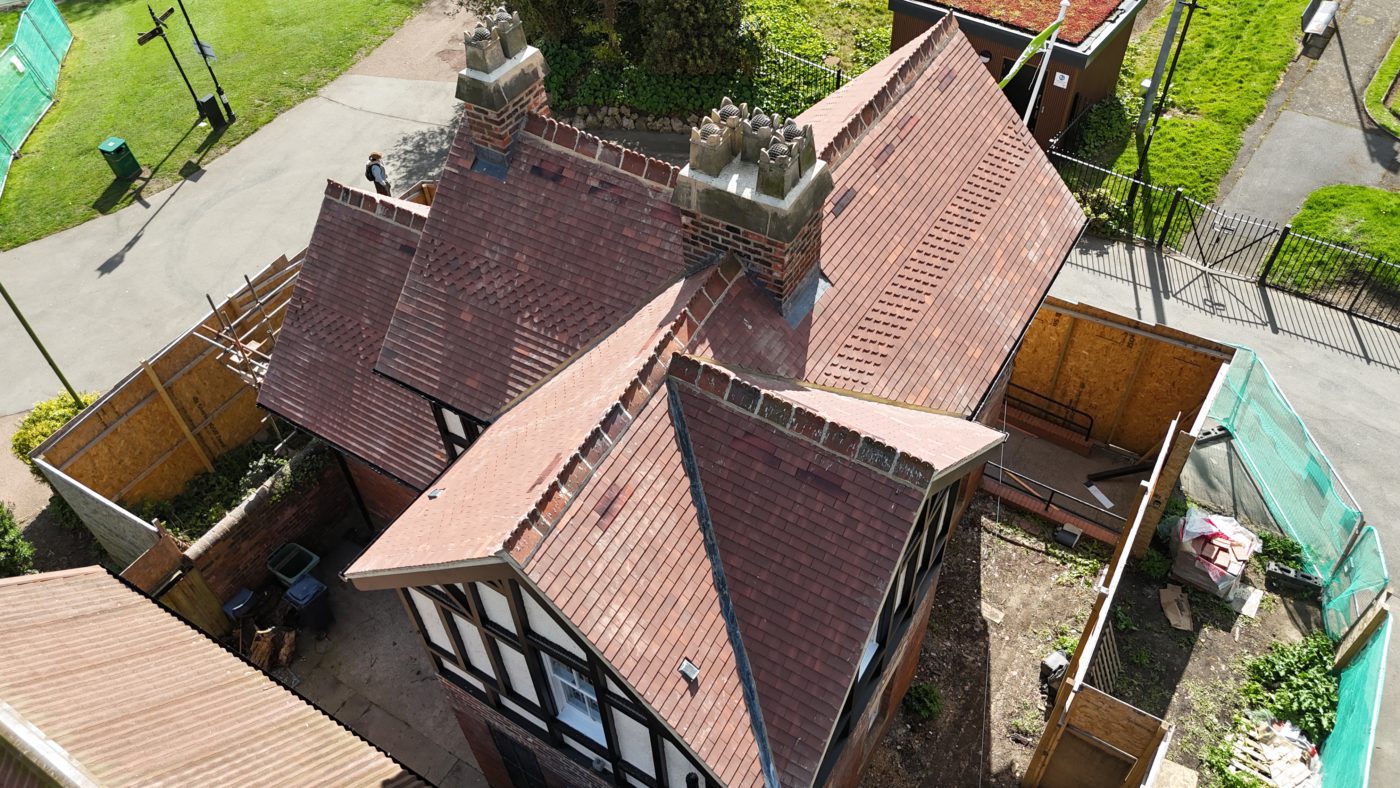
Located in the historic surroundings of Roker Park, this project involved a full roof renewal on a heritage property within a designated conservation area. The brief was clear: preserve the traditional appearance while upgrading the roof to modern performance standards and meeting ecological obligations.
This wasn’t just a re-roof. It was a careful balance between heritage compliance, bat conservation, and long-term durability.
Scope of Works
Full Strip and Re-Tile
We stripped the existing roof covering and installed approximately 30,000 Marley Acme Plain Tiles, maintaining the traditional aesthetic expected within the conservation area. These tiles are widely recognised for their suitability on heritage projects due to their size, texture, and ability to replicate historic roofscapes.
Bat Conservation Measures
Because bats were present within the roof space, the project required strict compliance with UK wildlife legislation.
We installed a non-air permeable bat membrane, specifically designed to protect bats while preventing ingress of wind-driven rain and debris. To maintain ecological access:
- 4 bat access tiles were installed discreetly within the roof slope
- Entry and exit points were positioned to suit bat movement patterns
- The system ensured compliance without compromising the roof’s weatherproofing
This is a critical detail often overlooked. Roofing in conservation areas is not just about appearance — it is about working with the environment, not against it.
Ventilation Strategy
Because bat membranes are non-breathable, the roof required a carefully considered ventilation design to prevent condensation build-up.
We introduced:
- Counter battens to create airflow pathways
- A ventilated build-up to allow the roof to “breathe”
- Balanced intake and exhaust ventilation across the structure
This ensures the longevity of the timber structure and prevents issues such as mould, rot, and interstitial condensation.
Leadwork Detailing
Leadwork was a major component of this project and carried out to traditional standards.
Works included:
- New lead valleys installed to manage water flow effectively
- Full replacement of lead flashings around chimney stacks
- Installation of a bespoke lead sump and hopper system
The sump detail was particularly unique. Water from the valley discharges into a formed lead sump before feeding into a hopper head — a traditional solution often found on older properties but rarely executed correctly today.
Ridge and Finishing Details
To retain the character of the building:
- Existing crested ridge tiles were carefully reused
- Ridge tiles were re-bedded using a traditional 3:1 sand and cement mix
- Decorative club tiles were installed along the roof, maintaining the original architectural detail
These finishing elements are what separate a standard job from a proper heritage restoration.
Challenges on the Project
This project required more than just installation skill. It demanded understanding of:
- Conservation area restrictions
- Wildlife protection regulations
- Traditional roofing methods
- Modern ventilation requirements
Balancing all four is where experience matters.
The Result
The completed roof sits seamlessly within the Roker Park conservation area. From street level, it looks untouched — exactly as it should.
But beneath the surface, it performs to modern standards, protects the structure, and supports local wildlife.
That’s the difference between just replacing a roof and doing the job properly.
Why This Matters
Heritage roofing is not about speed or cost-cutting. It is about:
- Respecting the building
- Understanding materials
- Getting the details right
- Thinking long-term
At Samuel Moore Roofing, this is where we operate best.
